
World Services for the Blind Foundation
The WSB Foundation enhances the operations, training, and opportunities for the clients of World Services for the Blind through philanthropy, endowment, and events. Whether it be through our Annual Vision Award, Events, or legacy donors the World Services for the Blind Foundation assists the World Services for the Blind Organization. Our Foundation supports educational programming, life skills, buildings and operations, and community partnerships.


Stories Like These Are The Reason We Ask For Your Help
When Myrna lost her vision, she had to quit work. She was missing so much with all the surgeries and doctor visits. This was especially hard for Myrna because she has always provided for herself and her son. She couldn’t provide for him any longer. She didn’t know where to turn. She didn’t know there was support through Social Security Disability benefits. She loved working and paying her own way. At this point she was draining her savings and wasn’t sure what to do.
Myrna started in the prevocational life skills training at WSB to learn assistive technology. Once she finished the prevocational program, she decided to take the medical billing training offered at WSB
She graduated from the medical billing program October 2022 and Med Evolve hired her to work for them full-time. Her new salary will allow her to come off the Disability benefits and become an independent provider again.
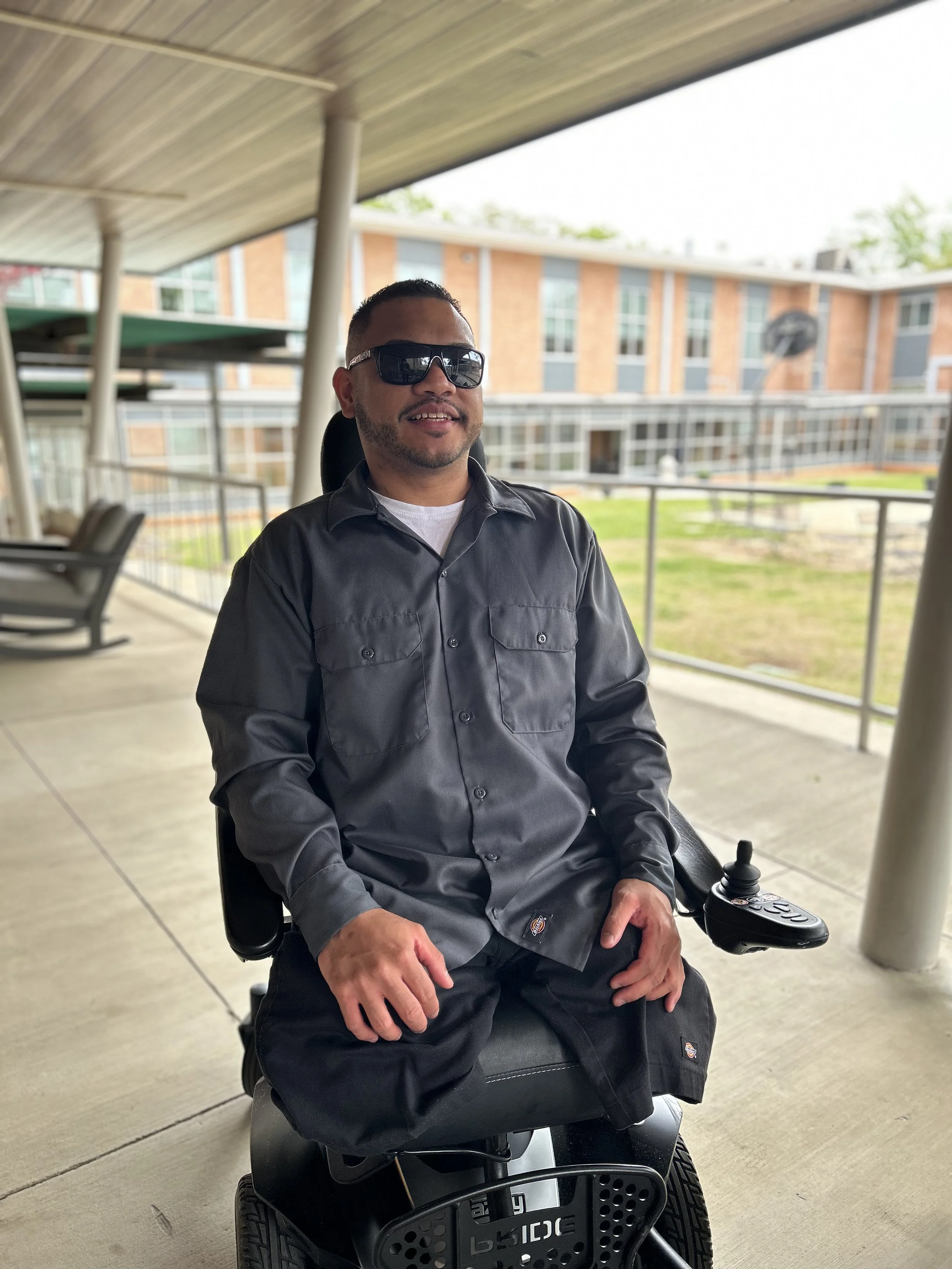
Shaq grew up in the Republic of Palau, a small island nation with a population of about 18,000 people. Raised primarily by his grandparents, he made the difficult decision to leave high school at 17 and moved to Washington to live with a cousin in search of opportunity and a better future.
He entered the workforce doing diesel mechanic and heavy machinery work in construction before relocating to San Diego for more job opportunities. At the time, Shaq was driven by what he describes as a “quick money” mindset. While working, he fell in with the wrong crowd and became involved with drugs and nightlife. Even after receiving an opportunity to travel to Utah for advanced training and landing a promising job, addiction continued to take hold of his life.
Eventually, Shaq lost his job and found himself living out of his car. With his last $100, he bought a Greyhound ticket back to Washington, hoping for a fresh start. Later, he moved to Arizona, where he worked in restaurants, but his addiction worsened.
Using unsanitary needles led to severe health complications, including necrotizing fasciitis. On December 28, 2019, Shaq woke up in intense pain and numbness. After initially resisting medical treatment because he did not want to reveal his drug use, he finally called for help. By the time he reached the hospital, he was drifting in and out of consciousness.
Shaq spent 10 days in a coma. When he woke up, disoriented and surrounded by darkness, he asked nurses how they were able to work “in the dark.” That was when he learned he had lost his vision as well as both of his legs. He recalls asking everyone to leave the room so he could process the reality of what had happened. He cried, then laughed in disbelief.
The isolation of the COVID-19 pandemic made recovery even more difficult. Because of hospital restrictions, visitors were not allowed, and Shaq had very limited support. During that time, he also received news that his grandmother, the woman who had raised him, had passed away. Angry at the world and overwhelmed by grief, Shaq relapsed and struggled with addiction for the next four years.
In July 2024, while living in Alaska, Shaq developed pancreatic pseudocysts “the size of a baseball.” During another hospitalization, he began asking himself why he was still alive and what purpose his life could still hold. He turned to God and started searching for a new direction.
Just three days later, hospital case managers visited his room with information about the Alaska Center for the Blind and other vocational rehabilitation resources. During a tour of the facility, Shaq met Nate Kyle, a blind mentor whose confidence and independence challenged everything Shaq believed about his own future. That experience became a turning point. For the first time since losing his sight and legs, Shaq began to believe that life could still hold purpose, independence, and opportunity.
That journey eventually led Shaq to the ATI program at WSB. What drew him to ATI was more than learning skills, it was the opportunity to regain confidence, build independence, and surround himself with people who believed in his potential. Through WSB and ATI, Shaq has found a supportive community, new direction, and hope for the future.
Now enrolled in the program, Shaq says he appreciates the hospitality, encouragement, and environment that WSB provides. His story is a reminder that even after immense loss, setbacks, and years of struggle, transformation is still possible. Through the right support system, determination, and willingness to begin again, hope can be found in places people least expect.
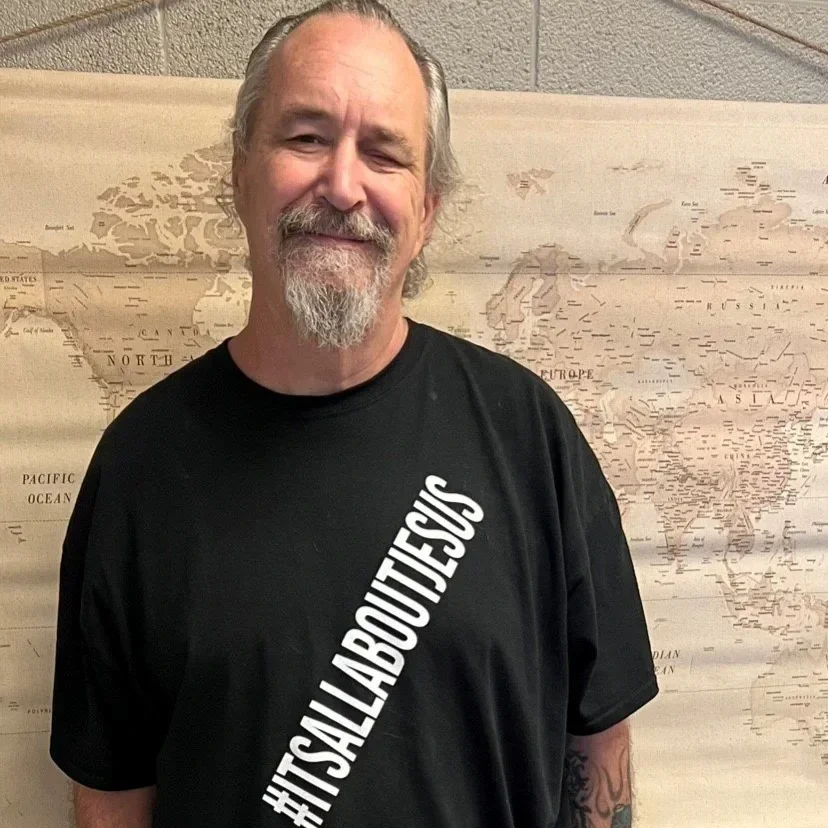
Rob grew up in North Carolina dreaming of a military career like his father’s. He served four years in the Navy, then worked on his father’s farm raising cattle and horses. Life changed forever when a violent dispute left him with a traumatic eye injury, complete blindness for three years, and only partial sight in one eye.
Unable to work, Rob fell into depression and addiction. His marriage ended, and at his lowest point, he attempted to take his own life. Surviving that moment, he realized, “God was not done with me yet.” He sought treatment in Georgia, got sober, and began rebuilding.
Encouraged by his counselor, Rob came to World Services for the Blind. Here, he’s gained skills in computers and Braille, found new purpose, and even married a fellow student. While some days are hard, Rob lives by “Improvise, Adapt, Overcome,” trusting God as he moves forward with hope.